

Warum Parfums so teuer sind: Eine Erklärung
Perfumes have been considered luxury objects for centuries and captivate people worldwide with their unique scents. But did you know that certain ingredients in the perfume trade are traded for up to 100,000 euros per kilo? Many people think the scent alone determines the value of a perfume, yet often the origin of tiny ingredients decides how exclusive and coveted a bottle truly becomes.
Table of Contents
- Understanding the Art of Perfume Making
- Exclusive Ingredients and Their Significance
- Research and Development in the Perfume Market
- Brand Image and Pricing
- The Role of Marketing and Advertising
Quick Summary
| Takeaway | Explanation |
|---|---|
| Perfumes Consist of Three Notes | Every fragrance composition is made up of top, heart and base notes, which have different functions. |
| Traditional and Modern Extraction Methods | Perfume materials are obtained through steam distillation, cold pressing or CO2 extraction, and each method has its advantages. |
| Exclusive Ingredients Increase Value | Precious fragrance materials such as oud and ambergris are rare and significantly raise the price of a perfume. |
| Synthetic Fragrances Offer Advantages | Synthetic components are more cost-effective and more consistent in quality, but are often combined with natural scents. |
| Brand Image Influences Pricing | The way a brand is perceived plays a decisive role in how perfumes are priced. |
Understanding the Art of Perfume Making
Perfume making is a complex art form that is far more than simply mixing different scents. It is a precise and elaborate process that requires years of expert knowledge and highly specialized skills. Our comprehensive guide to perfume making offers a deeper insight into this fascinating world.
The Components of a Perfume
Every perfume consists of carefully selected scent notes built up in different layers. These layers are referred to as top, heart and base notes. The top note is the first scent you perceive and is typically very volatile. The heart note develops after a few minutes and forms the true character of the fragrance. The base note lasts the longest and ensures the perfume's longevity.
The following table summarizes the most important components of a perfume and their characteristic properties to illustrate the complex interplay of scent notes.
| Component | Scent Perception | Function in the Perfume | Duration of Perception |
|---|---|---|---|
| Top Note | Perceptible in the first minutes | First impression, freshness | Short (approx. 5-15 min.) |
| Heart Note | Develops after a few minutes | Heart of the scent, characteristics | Medium (approx. 20-60 min.) |
| Base Note | Noticeable after the heart note fades | Depth, staying power, ensures longevity | Long (several hours) |
The Extraction Process
Obtaining fragrance materials is a complicated scientific process. Traditionally, scents are obtained through steam distillation, cold pressing or solvent extraction. Modern techniques also include:
- CO2 extraction for particularly pure fragrance materials
- Enfleurage for especially delicate floral scents
- Synthesis of fragrance materials in the laboratory
The European Cosmetic Industry Federation emphasizes that every step of perfume making requires the highest precision and care.
The art of perfume making resembles a complex orchestral piece in which every single scent note plays a decisive role. A perfumer combines scientific accuracy with artistic intuition to create unique and unforgettable fragrances.
Exclusive Ingredients and Their Significance
The choice of ingredients is crucial to the quality and value of a perfume. Not all fragrance materials are equal - some are so precious and rare that they dramatically drive up the price of a perfume. Our guide to luxury fragrances explains the nuances of this exclusive world.
The Most Precious Natural Essences
Some of the world's most expensive fragrance materials come from extremely rare sources. Oud, a resin from the Aquilaria tree, can cost up to 100,000 euros per kilo. Other rare essences such as ambergris, a mysterious extract from whales, are also incredibly valuable. According to Fragrantica, some of these natural products can reach astronomical prices.
Synthetic vs. Natural Fragrance Materials
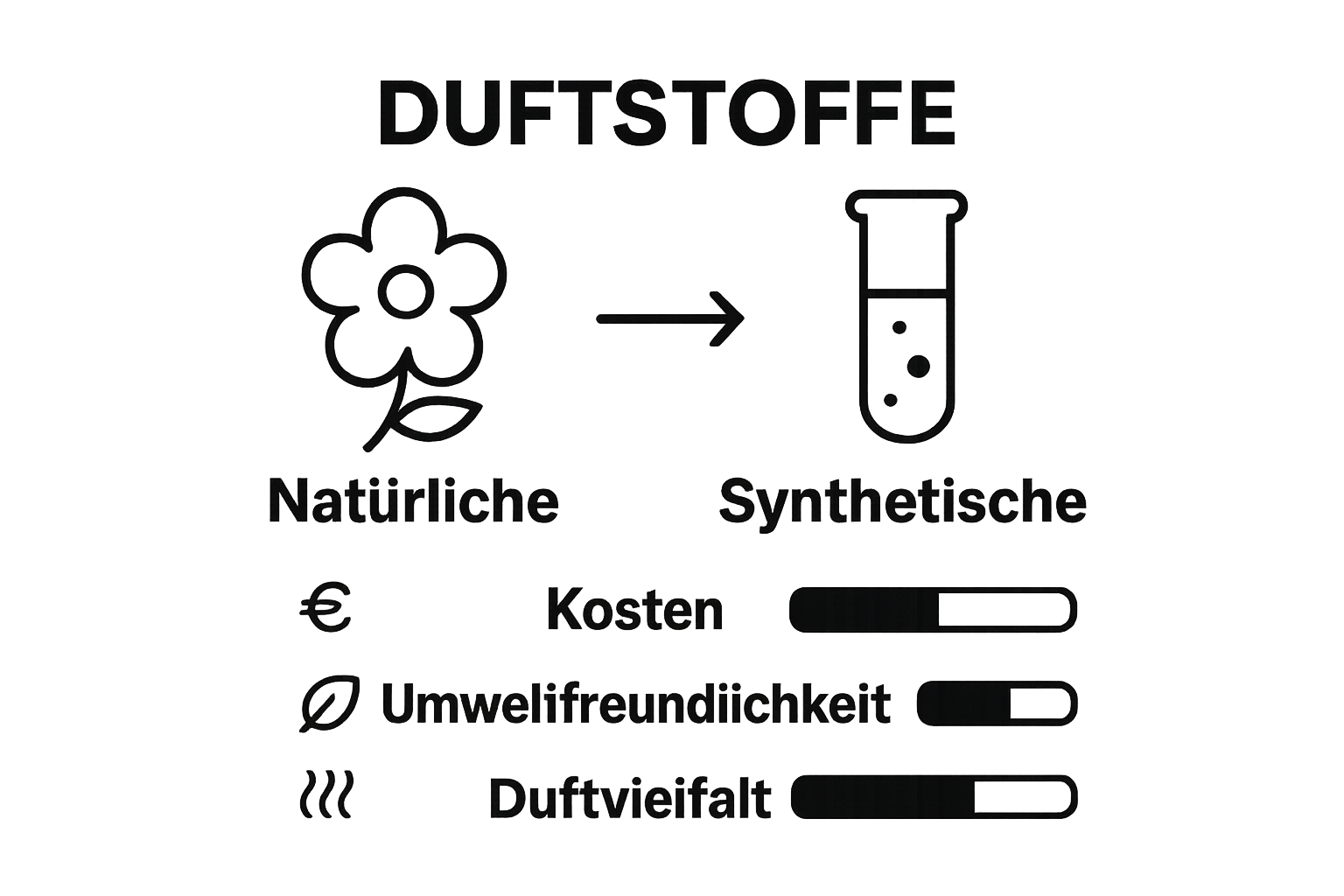
Modern perfumers distinguish between natural and synthetic fragrance materials. Synthetic components have several advantages:
- More consistent quality
- Lower production costs
- More environmentally friendly production
- Possibility of creating entirely new scent nuances
Natural scents, however, remain particularly prized for their complexity and authenticity.
The following comparison table illustrates the differences between natural and synthetic fragrance materials to make their respective properties easier to understand.
| Fragrance Material Type | Origin | Advantages | Special Characteristics |
|---|---|---|---|
| Natural Fragrance Materials | Plant or animal sources | Authenticity, complexity | Rare, elaborate extraction |
| Synthetic Fragrance Materials | Produced in the laboratory | Consistent quality, more cost-effective, sustainable production possible | Creation of new scent nuances |
| Combinations | Blend of both types | Harmony, individuality, longevity | Common in high-quality perfumes |
Selecting and combining these ingredients requires not only chemical expertise but also an artistic vision. Each ingredient contributes to the overall composition and ultimately determines the character and value of the perfume.
Research and Development in the Perfume Market
The perfume market is a dynamic field that requires constant innovation and creative research. Our insights into perfume industry regulations show the complexity of this market.
Technological Innovations
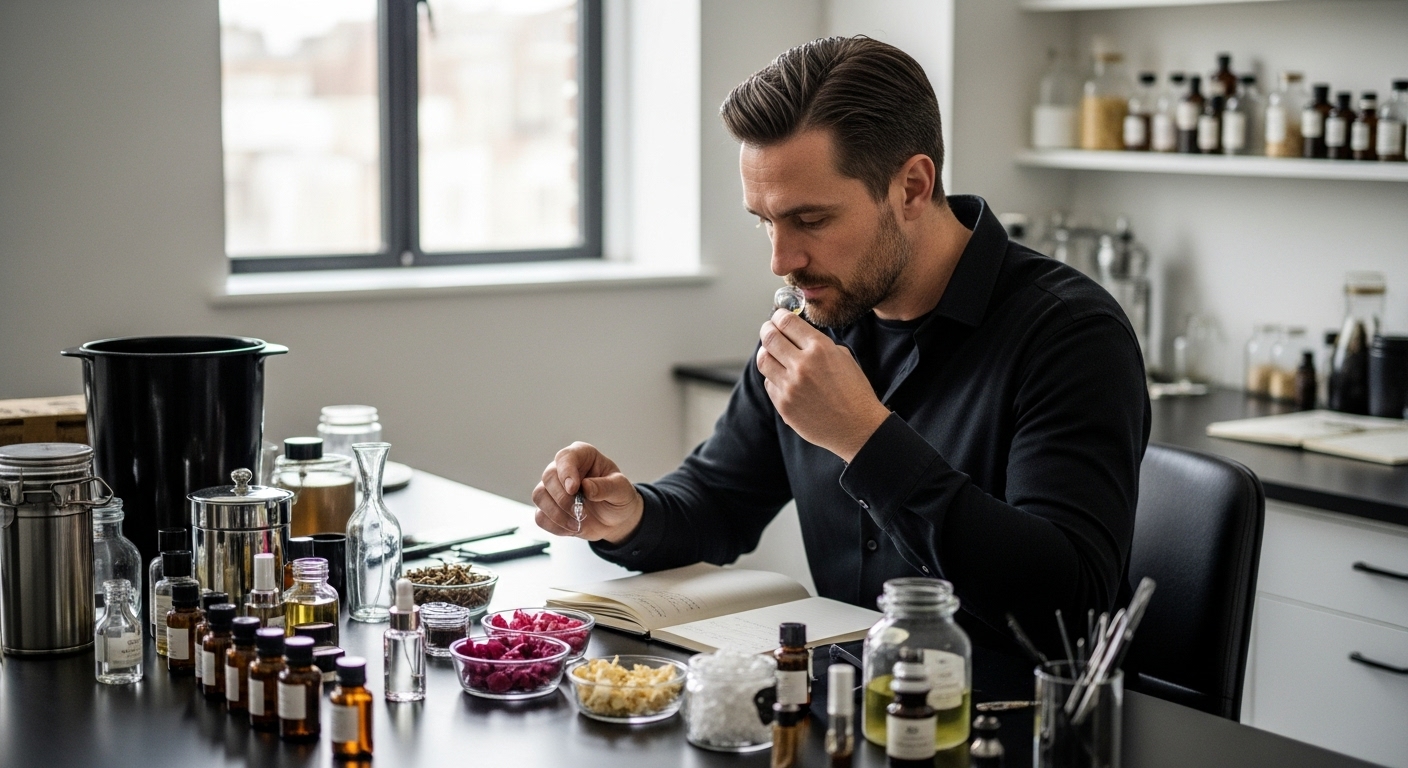
Modern research in the perfume sector goes far beyond traditional scent compositions. Scientists are increasingly developing synthetic molecules that enable entirely new sensory experiences. Novel technologies such as molecular biology and climate research open up completely new design possibilities for perfumers.
Sustainability Research
A significant focus of current developments lies on sustainability. Researchers are working on environmentally friendly alternatives to traditional fragrance extracts. Important research approaches include:
- Development of bio-based fragrance materials
- Reducing environmental impact in production
- Exploring recycling options for perfume packaging
According to the European cosmetics industry association, companies are investing heavily in sustainable innovations to minimize environmental impact.
Research and development in the perfume market is a complex interplay of creativity, science and technological progress. Every innovation not only expands the possibilities of creating scents but also contributes to a more responsible and sustainable production process.
Brand Image and Pricing
Brand image plays a decisive role in how perfumes are priced. Our analysis of perfume valuation helps to understand the mechanisms behind luxury prices.
Luxury and Prestige
Brand identity is more than just a name - it is a complex construct of history, reputation and emotions. Luxury brands invest enormously in creating an exclusive image. This includes not only the perfume composition, but also:
- Elaborate marketing campaigns
- High-quality packaging designs
- Exclusive distribution channels
- Prominent brand ambassadors
Psychological Pricing Strategies
Pricing follows complex psychological mechanisms. According to economic-psychological studies, consumers associate higher prices with better quality and greater prestige. Premium brands deliberately use this effect to position their products.
A perfume is judged not only by its actual production costs but by its perceived value. This arises through storytelling, tradition and the sense of exclusivity that a brand conveys.
Pricing is therefore a science in its own right - a complex interplay of production costs, marketing strategy and psychological perception.
The Role of Marketing and Advertising
Marketing and advertising are decisive factors that fundamentally shape the value and perception of perfumes. The future of perfume dupes shows how innovative marketing strategies transform the market.
Emotional Staging
Perfume advertising is an art form of emotional manipulation. Marketing experts create not just a product, but a complete lifestyle feeling. They sell not fragrances, but dreams, identities and promises. An advertising campaign conveys more than the scent - it communicates an idea of luxury, romance or adventure.
Communication Channels
Modern perfume brands use diverse communication strategies:
- Social media campaigns
- Influencer marketing
- International advertising campaigns
- Emotional storytelling formats
- Viral marketing actions
According to the Statistical Marketing Institute, top brands invest millions every year in marketing activities to emotionally charge their products.
Advertising transforms a chemical product into a desirable status symbol. It creates a connection between the physical perfume and the fantasies of consumers.
Do you love extraordinary scents - but don't want to pay luxury prices?
Anyone who knows the fascinating background of perfume making knows how much expertise, rare raw materials and marketing influence the price of a fragrance. But as a true fragrance lover, you above all seek one thing: unique aromas of high quality without breaking your budget. At Alexandria Fragrances, you will find perfume-inspired creations and exclusive dupes that fulfill exactly this wish. We rely on high-quality ingredients and devoted craftsmanship so you can experience real luxury - with no compromises.

Treat yourself to the fragrance you deserve, at a price that delights. Discover our selection of inspiring perfumes and fragrance dupes. Immerse yourself now in the fascinating world of scent at Alexandria Fragrances and experience surprising aromas that will captivate you instantly.
Frequently Asked Questions
Why are perfumes so expensive?
The price of perfumes is made up of various factors, including the quality of the ingredients, the complexity of the scent composition and the production processes. Exclusive and rare raw materials considerably increase the price.
What are the most important components of a perfume?
Every perfume consists of top, heart and base notes. These scent notes determine the fragrance experience and the longevity of the perfume, with each layer contributing to a harmonious overall result.
What is the difference between natural and synthetic fragrance materials?
Natural fragrance materials come from plant or animal sources, while synthetic fragrance materials are produced in the laboratory. The latter offer consistency and are often less expensive, while natural scents are valued for their authenticity and complexity.
How does marketing affect the price of perfumes?
Marketing and brand image play a decisive role in pricing. Luxury brands invest in advertising and exclusive presentation, which increases the perceived value of the perfume and in turn is reflected in the price.


