

Was ist die Haltbarkeit eines Parfums? Warum sie wichtig ist
Die Haltbarkeit eines Parfums ist mehr als nur eine Frage von aufwendiger Verpackung oder hohen Preisen. Manche Parfümkonzentrationen halten bis zu 8 Stunden oder länger, während andere schon nach weniger als zwei Stunden verfliegen. Die meisten Menschen glauben, dass die teuerste Flasche automatisch einen Duft garantiert, der den ganzen Tag anhält. Tatsächlich liegt das Geheimnis in der Hautchemie, der Konzentration und sogar in der Art, wie man jeden Sprühstoß aufträgt.
Inhaltsverzeichnis
- Haltbarkeit von Parfum definieren: Grundlegende Konzepte
- Die Bedeutung der Haltbarkeit bei der Duftauswahl
- Faktoren, die die Haltbarkeit von Parfüm beeinflussen
- Häufige Irrtümer über die Haltbarkeit von Parfüm
- So beurteilen Sie die Haltbarkeit Ihrer Lieblingsdüfte
Kurzübersicht
| Zum Mitnehmen | Erklärung |
|---|---|
| Die Duftkonzentration beeinflusst die Haltbarkeit. | Höhere Konzentrationen wie Parfum halten länger als leichtere Varianten wie Eau de Cologne. |
| Die Hautchemie beeinflusst die Duftdauer. | Trockenere Haut führt in der Regel zu einer kürzeren Haltbarkeit des Duftes als gut befeuchtete Haut. |
| Die Anwendungstechnik ist entscheidend für die Leistung. | Das Auftragen von Parfüm auf die Pulspunkte verbessert dank Wärme und Durchblutung die Duftentfaltung und Haltbarkeit. |
| Langlebigkeit beeinflusst den wirtschaftlichen Wert. | Länger anhaltende Parfums verringern die Häufigkeit des Nachauftragens und sind auf lange Sicht wirtschaftlicher. |
| Gängige Mythen über Langlebigkeit entlarven. | Der Preis garantiert keine Langlebigkeit; konzentrieren Sie sich stattdessen auf die Konzentration und die Anwendungstechniken. |
Haltbarkeit von Parfüm definieren: Grundlegende Konzepte
Die Haltbarkeit eines Parfüms beschreibt, wie lange ein Duft nach dem Auftragen auf der Haut wahrnehmbar und angenehm bleibt. Wer diesen grundlegenden Aspekt von Düften versteht, kann beim Kauf fundierte Entscheidungen treffen und Düfte auswählen, die zum eigenen Lebensstil und zu den persönlichen Vorlieben passen.
Die Wissenschaft hinter der Duftdauer
Im Kern hängt die Haltbarkeit eines Parfüms von mehreren miteinander verknüpften Faktoren ab. Duftkonzentration spielt eine entscheidende Rolle dafür, wie lange ein Duft anhält. Parfums werden in der Regel in verschiedene Intensitätsstufen eingeteilt, die sich jeweils durch eine unterschiedliche Haltbarkeit auszeichnen:
Die folgende Vergleichstabelle zeigt die verschiedenen Duftkonzentrationen mit ihrem jeweiligen Anteil an Aromastoffen und der typischen Haltbarkeit auf der Haut und schafft so Klarheit darüber, wie sich die einzelnen Optionen im Alltag bewähren.
| Konzentrationstyp | Aromatische Verbindung (%) | Typische Haltbarkeit (Stunden) |
|---|---|---|
| Parfum/Extrait de Parfum | 20-40 | 6-8 |
| Eau de Parfum | 15-20 | 4-5 |
| Eau de Toilette | 5-15 | 2-3 |
| Eau de Cologne | 2-4 | 1-2 |
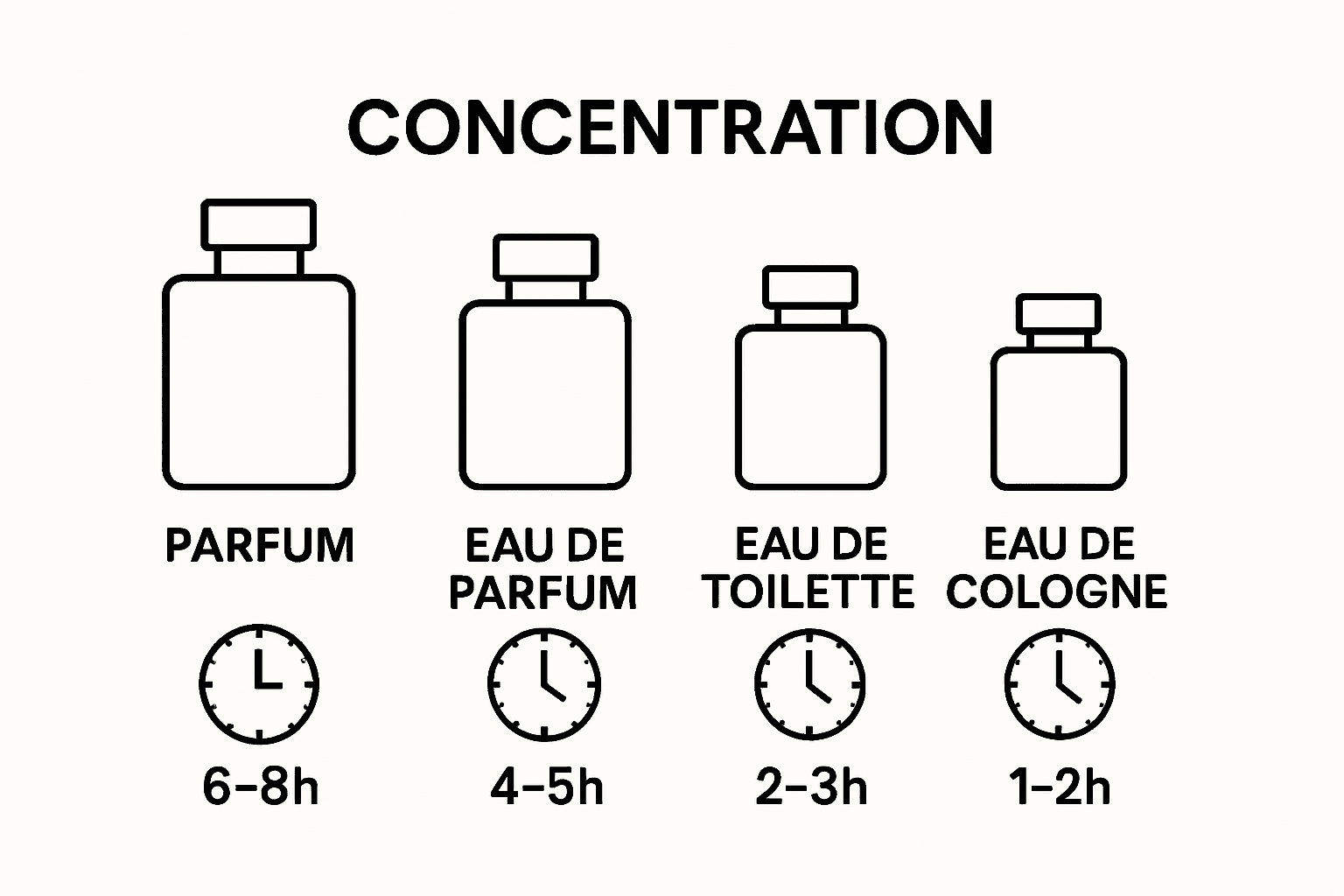
- Parfum/Extrait de Parfum: Höchste Konzentration (20-40 % Aromastoffe), hält 6-8 Stunden an
- Eau de Parfum: Mittlere Konzentration (15–20 % Aromastoffe), hält 4–5 Stunden an
- Eau de Toilette: Niedrigere Konzentration (5–15 % Aromastoffe), hält 2–3 Stunden an
- Eau de Cologne: Leichteste Konzentration (2–4 % Aromastoffe), hält 1–2 Stunden an
Faktoren, die die Haltbarkeit eines Duftes beeinflussen
Mehrere Faktoren beeinflussen, wie lange ein Parfüm wahrnehmbar bleibt. Hautchemie, Umgebungstemperatur, Luftfeuchtigkeit und die individuelle Körperwärme beeinflussen die Duftentfaltung und Haltbarkeit erheblich. Menschen mit trockenerer Haut erleben in der Regel eine kürzere Duftdauer als Menschen mit feuchtigkeitsreicherer Haut.
Für Duftliebhaber, die nach länger anhaltenden Düften suchen, diese nuancierten Merkmale verstehen wird von größter Bedeutung. Die Auswahl hochwertiger Parfums mit der passenden Konzentration und das Verständnis für die individuelle Wechselwirkung mit der eigenen Haut können das persönliche Duft-Erlebnis erheblich verbessern.
Die Bedeutung der Haltbarkeit bei der Duftauswahl
Die Haltbarkeit eines Duftes ist für Verbraucher ein entscheidendes Kriterium bei der Auswahl von Parfüms und macht aus einem einfachen Kauf eine strategische Investition in den persönlichen Stil und das Sinneserlebnis. Zu verstehen, wie lange ein Duft anhält, kann sowohl die praktische Anwendung als auch die Gesamtzufriedenheit mit einem Parfüm erheblich beeinflussen.
Wirtschaftliche und praktische Überlegungen
Die Haltbarkeit wirkt sich unmittelbar auf den wirtschaftlichen Wert eines Parfüms aus. Langanhaltende Düfte lassen sich effizienter verwenden, müssen seltener nachgetragen werden und bieten letztlich ein besseres Preis-Leistungs-Verhältnis. Verbraucherforschung zeigt, dass Menschen Parfums mit langer Haltbarkeit auf der Haut bevorzugen, da sie diese als kostengünstiger und praktischer ansehen.
Zu den wichtigsten wirtschaftlichen Vorteilen langanhaltender Düfte zählen:
- Weniger Anwendungen pro Tag erforderlich
- Geringerer Gesamtproduktverbrauch
- Besseres Preis-Leistungs-Verhältnis pro Tragen
- Weniger Bedarf, zusätzliche Parfümflakons mitzunehmen
Psychologische und soziale Dimensionen
Die Haltbarkeit eines Parfüms geht über die reine Praktikabilität hinaus und berührt tiefere psychologische und soziale Dimensionen der persönlichen Außenwirkung. Ein Duft, der seinen Charakter den ganzen Tag über bewahrt, vermittelt Selbstvertrauen, Raffinesse und sorgfältige Körperpflege. Hitzebeständige Duftauswahl wird besonders wichtig bei schwierigen Umgebungsbedingungen und sorgt für eine gleichbleibende Duftpräsenz.
Über die persönliche Zufriedenheit hinaus hinterlassen langanhaltende Düfte bleibende Sinneseindrücke im Miteinander. Wenn ein Duft dezent über verschiedene Aktivitäten hinweg wahrnehmbar bleibt, zeugt das von Qualität und Sorgfalt bei der persönlichen Stilwahl. Die Haltbarkeit ist daher ein entscheidendes Kriterium für anspruchsvolle Parfümliebhaber.
Faktoren, die die Haltbarkeit von Parfüm beeinflussen
Die Haltbarkeit eines Parfüms hängt von einem komplexen Zusammenspiel mehrerer Umwelt-, Körper- und chemischer Faktoren ab, die bestimmen, wie lange ein Duft nach dem Auftragen wahrnehmbar bleibt. Wer diese vielschichtigen Zusammenhänge versteht, kann sein Dufterlebnis optimieren und fundiertere Kaufentscheidungen treffen.
Die folgende Tabelle fasst die wichtigsten physiologischen und umweltbedingten Faktoren zusammen, die beeinflussen, wie lange ein Parfüm auf der Haut hält, und hilft den Leserinnen und Lesern, die Einflussgrößen auf die Haltbarkeit eines Duftes besser zu verstehen.
| Faktor | Auswirkungen auf die Langlebigkeit | Details/Hinweise |
|---|---|---|
| pH-Werte der Haut | Verändert die Duftentwicklung und -haltbarkeit | Kann die Wechselwirkung von Molekülen mit der Haut verändern |
| Hautfeuchtigkeit | Verlängert die Lebensdauer | Gut durchfeuchtete Haut hilft dabei, Duftmoleküle zu speichern |
| Körpertemperatur | Beeinflusst die Verdunstungsrate des Duftes | Wärmere Körper beschleunigen die Verdunstung |
| Talgproduktion | Kann die Langlebigkeit verbessern | Fettige Haut hält Duft länger |
| Umgebungstemperatur | Höhere Temperaturen verkürzen die Lebensdauer | Duft verfliegt bei Hitze schneller |
| Luftfeuchtigkeit | Variable Effect | Kann die Projektion entweder verstärken oder abschwächen |
| Anwendungstechnik | Optimiert die Leistung | Pulspunkte und Aufbewahrung sind wichtige Aspekte |
Physiologische und hautbezogene Faktoren
Wissenschaftliche Forschung zeigt, dass individuelle physiologische Merkmale die Haltbarkeit eines Duftes maßgeblich beeinflussen. Hauttyp, Feuchtigkeitsgehalt und die persönliche Körperchemie spielen eine entscheidende Rolle dafür, wie sich ein Parfüm entfaltet und sein Duftprofil beibehält. Zu den wichtigsten physiologischen Faktoren zählen:
- pH-Werte der HautBeeinflusst, wie Duftmoleküle mit der Haut interagieren
- Hautfeuchtigkeit: Gut durchfeuchtete Haut hilft Düften, besser zu haften
- Körpertemperatur: Höhere Temperaturen beschleunigen die Verdunstung des Duftes
- TalgproduktionFettige Haut kann dazu beitragen, dass Düfte länger halten
Umwelt- und Anwendungshinweise
Äußere Bedingungen beeinflussen die Haltbarkeit eines Parfums erheblich. Temperatur, Luftfeuchtigkeit und Auftragetechnik können die Leistung eines Duftes grundlegend verändern. In wärmeren Umgebungen verflüchtigt sich der Duft in der Regel schneller, während kühlere Bedingungen dazu beitragen, die molekulare Struktur des Duftes zu bewahren.
Auch die Anwendungsstrategien beeinflussen die Haltbarkeit maßgeblich. Pulspunkte wie Handgelenke, Hals und hinter den Ohren sorgen für optimale Wärme und Durchblutung, damit sich der Duft besser entfalten kann. Richtige Aufbewahrung von Parfüm sorgt außerdem dafür, dass die molekulare Integrität eines Duftes erhalten bleibt, und schützt seine wesentlichen aromatischen Verbindungen vor dem Abbau.
Die Duftkomposition selbst bleibt ein grundlegender Faktor für die Haltbarkeit. Parfums mit schwereren Basisnoten wie holzigen, moschusartigen oder orientalischen Elementen weisen in der Regel eine bessere Haftung auf als leichtere, flüchtigere Zitrus- oder Blumenkompositionen.
Verbreitete Mythen über die Haltbarkeit von Parfüm
Parfümliebhaber begegnen häufig zahlreichen Irrtümern rund um die Haltbarkeit von Düften, die zu unrealistischen Erwartungen und ungünstigen Kaufentscheidungen führen können. Um diese Mythen zu entkräften, bedarf es eines differenzierten Verständnisses der Duftchemie und der individuellen Sinneswahrnehmung.
Irrtümer über Preis und Qualität
Verbraucherstudien stellen die weit verbreitete Annahme infrage, dass teure Parfums automatisch eine überlegene Haltbarkeit garantieren. Entgegen der landläufigen Meinung steht der Preis nicht in direktem Zusammenhang mit der Haltbarkeit eines Duftes. Konzentration und Molekulare Zusammensetzung spielen eine deutlich größere Rolle als das Markenprestige oder der Preis.
Häufige Preismythen sind:
- Luxusmarken bieten stets langanhaltendere Düfte
- Ein höherer Preis bedeutet automatisch bessere Leistung
- Designer-Parfums sind günstigeren Alternativen durchweg überlegen
- Hochwertige Verpackung garantiert eine bessere Duftbewahrung
Missverständnisse bei Anwendung und Aufbewahrung
Um Parfümanwendung und Aufbewahrung ranken sich zahlreiche Mythen. Viele glauben, dass das Aneinanderreiben der Handgelenke nach dem Aufsprühen die Duftwirkung verstärkt, obwohl dieses Verhalten in Wirklichkeit Molekülstrukturen aufschlüsseln und verringern die Haltbarkeit. Ebenso kann die Aufbewahrung von Parfums in Badezimmerschränken oder an Orten mit Temperaturschwankungen ihre chemische Zusammensetzung erheblich beeinträchtigen.
Außerdem, Die Nuancen luxuriöser Düfte verstehen hilft Verbrauchern, fundiertere Entscheidungen zu treffen. Der hartnäckige Mythos, dass mehr Sprühstöße automatisch zu einem länger anhaltenden Duft führen, ist grundlegend falsch. Eine gezielte, strategische Anwendung an den Pulspunkten ist weitaus wirkungsvoller als übermäßiges Aufsprühen.
Wer diese Mythen versteht, kann beim Kauf und bei der Anwendung von Parfüm fundiertere, wissenschaftlich gestützte Entscheidungen treffen.
So beurteilen Sie die Haltbarkeit Ihrer Lieblingsdüfte
Die Beurteilung der Haltbarkeit eines Parfüms erfordert ein systematisches Vorgehen, das persönliche Erfahrung, wissenschaftliches Verständnis und gezielte Bewertungstechniken miteinander verbindet. Duftliebhaber können differenzierte Methoden entwickeln, um die Leistung und Beständigkeit eines Dufts präzise einzuschätzen.
Techniken zur beruflichen und persönlichen Bewertung
Dokumentation zu Duftstoffen zeigt mehrere Strategien zur Beurteilung der Haltbarkeit von Parfüm. Erfahrene Duftliebhaber verfolgen umfassende Ansätze, die über beiläufige Beobachtungen hinausgehen, und entwickeln strukturierte Rahmenwerke zur Messung der Duftleistung.
Zu den wichtigsten Bewertungsmethoden gehören:
- Tatsächliche Tragezeit mit präziser Zeitmessung erfassen
- Duftentwicklung in den verschiedenen Phasen beobachten
- Vergleich der Leistung unter verschiedenen Umgebungsbedingungen
- Subjektive Eindrücke in regelmäßigen Abständen festhalten
Strategien zur sensorischen Beurteilung
Molekulare Komplexität spielt eine entscheidende Rolle dafür, wie lange ein Duft wahrnehmbar bleibt. Um die Haltbarkeit zu beurteilen, muss man verstehen, wie verschiedene Duftnoten miteinander interagieren und sich im Laufe der Zeit zersetzen. Basisnoten bieten in der Regel das langanhaltendste Dufterlebnis, wobei holzige, moschusartige und orientalische Kompositionen eine überlegene Haltbarkeit aufweisen.
Hochwertiges Parfüm erkennen erfordert ein ausgeprägtes Sinnesempfinden. Kenner und Liebhaber sollten auf Folgendes achten:
- Anfängliche Projektionsstärke
- Allmähliche Duftveränderung
- Dezente Rückstände nach längerem Tragen
- Konsistenz über mehrere Anwendungen hinweg
Das Verständnis dieser differenzierten Bewertungstechniken befähigt Duftliebhaber, fundiertere Kaufentscheidungen zu treffen und die komplexe Welt der Parfümerie noch mehr wertzuschätzen.

Entdecken Sie langanhaltende Parfümqualität mit Alexandria UK
Haben Sie schon einmal einen wunderschönen Duft ausgewählt und waren dann enttäuscht, weil er bereits nach wenigen Stunden verflogen ist? Viele Parfümliebhaber haben Mühe, langanhaltende Düfte zu finden, die wirklich zu ihrem Stil passen und einen ganzen anstrengenden Tag durchhalten. In unserem Artikel haben wir die Wissenschaft hinter der Haltbarkeit von Parfüm untersucht und erklärt, warum ein Duft mit Ausdauer sowohl für das Selbstbewusstsein als auch für ein gutes Preis-Leistungs-Verhältnis so wichtig ist. Wenn Sie nach herausragenden Parfüms suchen, die von ikonischen Düften inspiriert sind, aber eine überlegene Haltbarkeit und unvergleichliche Qualität bieten, sind Sie hier genau richtig.
Erleben Sie den Unterschied noch heute. Besuchen Sie Alexandria UK und stöbern Sie in unserer mit Sorgfalt kreierten Kollektion an Parfums und Dupes, die allesamt auf eine besonders lange Haltbarkeit auf der Haut ausgelegt sind. Möchten Sie mehr erfahren? In unserer Fragrance Academy erfahren Sie, wie wir in jeder Flasche eine hochwertige Beständigkeit sicherstellen, und mit unseren Tipps zur richtigen Aufbewahrung Ihrer Parfums holen Sie das Beste aus Ihrem Duft heraus. Geben Sie sich nicht mit flüchtigen Düften zufrieden. Entscheiden Sie sich für einen Duft, der Sie begleitet, und erleben Sie jetzt die Selbstsicherheit einer Ausstrahlung, die den ganzen Tag anhält.
Häufig gestellte Fragen
Was ist die Haltbarkeit eines Parfums?
Die Haltbarkeit eines Parfums bezeichnet die Dauer, über die ein Duft nach dem Auftragen auf der Haut wahrnehmbar und angenehm bleibt.
Welche Faktoren beeinflussen, wie lange ein Parfüm hält?
Die Haltbarkeit eines Parfüms hängt von mehreren Faktoren ab, darunter die Duftkonzentration, die individuelle Körperchemie, der Hauttyp, der Feuchtigkeitsgehalt der Haut, die Umgebungsbedingungen und die Art der Anwendung.
Wie kann ich erreichen, dass mein Parfüm länger hält?
Damit Ihr Parfum länger hält, tragen Sie es auf Pulspunkten wie Handgelenken und Hals auf, achten Sie auf eine gut mit Feuchtigkeit versorgte Haut, lagern Sie Ihre Düfte richtig, geschützt vor Hitze und Licht, und wählen Sie Parfums mit höherer Duftstoffkonzentration.
Halten teurere Parfums immer länger?
Nicht unbedingt. Der Preis eines Parfüms steht nicht immer im Zusammenhang mit seiner Haltbarkeit. Faktoren wie Konzentration und molekulare Zusammensetzung sind für die Dauer eines Duftes weitaus entscheidender als das Prestige der Marke oder der Preis.
Empfohlen
- Verstehen, welches Parfüm am längsten hält
- Was ist das teuerste Parfum? Luxusdüfte verstehen
- Hochwertiges Parfüm erkennen: Eine Schritt-für-Schritt-Anleitung
- Warum Parfüm so teuer ist und welchen Wert es bietet
- Die wichtigsten Vorteile der Aromatherapie in der Hautpflege für strahlende Haut
- AROMAS ENCAPSULADOS - kolorguide


