


Popular Perfume Families – Choosing Your Signature Scent
Most people are surprised to learn that over 80 percent of british consumers choose their signature fragrance without truly understanding the differences between perfume families and fragrance notes. Knowing how scents are classified reveals why one perfume feels fresh and effortless while another feels rich and sensual. This guide demystifies what sets each fragrance family apart, helping you unravel the layers behind every captivating british scent and make more confident choices.
Table of Contents
- Defining Perfume Families And Fragrance Notes
- Key Scent Types: Floral, Woody, Oriental, Fresh
- How Perfume Notes Create Distinct Aromas
- Comparing Warm Versus Fresh Fragrance Styles
- Common Mistakes When Selecting Perfume Families
Key Takeaways
| Point | Details |
|---|---|
| Understanding Fragrance Families | Familiarise yourself with different fragrance families to discover scents that resonate with your personal style and emotional expression. |
| Importance of Perfume Notes | Recognise the roles of top, heart, and base notes in developing a fragrance’s character over time for a more rewarding scent experience. |
| Warm Versus Fresh Styles | Choose between warm and fresh fragrances based on personal preference, climate, and occasion to enhance your olfactory expression. |
| Avoid Common Mistakes | Test fragrances thoroughly on your skin and consider your body chemistry to ensure a satisfying selection process and avoid disappointment. |
Defining Perfume Families And Fragrance Notes
Navigating the intricate world of perfumery begins with understanding fragrance families - the foundational classification system that helps perfume enthusiasts and novices alike discover their ideal scent profile. Fragrance families represent distinct olfactory categories that group perfumes based on their predominant aromatic characteristics, creating a systematic approach to understanding complex scent compositions.
Fragrance families typically encompass several primary categories, each with unique sensory attributes. The classic fragrance families include Floral (featuring rose, jasmine, and lily notes), Oriental (rich with warm, spicy elements), Woody (characterised by cedar, sandalwood, and pine essences), Citrus (bright, zesty notes), and Aromatic (herbal and fresh scent profiles). These classifications help perfume lovers navigate the overwhelming world of fragrances by providing a structured framework for understanding scent compositions.

Within these families, fragrance notes serve as the building blocks of perfume creation. Notes are individual scent components that combine to create a perfume’s overall olfactory experience. They are typically divided into three layers: top notes (initial impressions), heart notes (the perfume’s core character), and base notes (lasting impressions that develop over time). Types of Perfume Notes: Complete Guide for UK Buyers offers comprehensive insights into how these intricate layers interact and create complex sensory experiences.
Pro Tip: Scent Selection Strategy: When exploring perfume families, sample fragrances from different categories and note how they evolve on your skin. Individual body chemistry dramatically impacts how a scent develops, so what smells extraordinary on one person might differ entirely on another.
Key Scent Types: Floral, Woody, Oriental, Fresh
Perfume enthusiasts navigate an intricate landscape of fragrance families, each offering a distinctive sensory experience that reflects personal style and emotional expression. Woody Fragrances: Everything You Need to Know reveals the complex world of scent profiles that allow individuals to express their unique personality through carefully selected aromatic compositions.
The primary fragrance families represent distinctive olfactory experiences that cater to different preferences and moods. Floral fragrances burst with delicate flower essences like rose, jasmine, and lily, embodying femininity and romantic elegance. Woody scents deliver earthy, grounding notes of cedar, sandalwood, and pine, often preferred by those seeking sophisticated, mature aromas. Oriental fragrances introduce rich, warm compositions featuring spices, vanilla, and amber, creating sensual and mysterious olfactory landscapes. Fresh families capture clean, crisp elements like citrus, green herbs, and aquatic notes, perfect for those desiring light, invigorating experiences.
Each fragrance family contains nuanced sub-categories that provide incredible depth and complexity. Woody scents, for instance, range from dry and smoky to soft and creamy, allowing remarkable versatility in personal scent selection. Understanding these subtle variations helps perfume lovers move beyond generic descriptions and develop a more refined appreciation for intricate fragrance compositions.
Here is a summary comparing key fragrance families:
| Fragrance Family | Typical Notes | Mood/Energy | Best Season |
|---|---|---|---|
| Floral | Rose, jasmine, lily | Romantic, elegant | Spring, summer |
| Woody | Cedar, sandalwood, pine | Earthy, sophisticated | Autumn, winter |
| Oriental | Spices, amber, vanilla | Warm, sensual | Autumn, evening |
| Fresh | Citrus, green herbs, aquatic | Crisp, uplifting | Spring, summer |
Pro Tip: Scent Exploration: Sample fragrances from multiple families during different times of day and seasons. Your perception and appreciation of a scent can dramatically change based on temperature, humidity, and personal body chemistry.
How Perfume Notes Create Distinct Aromas
Perfume composition is an intricate art form where fragrance notes work together like musical instruments, creating complex and harmonious olfactory experiences. Understanding the Types of Fragrance Notes in Perfume reveals how these sophisticated aromatic elements interact to produce unique and captivating scent profiles that evoke powerful emotional responses.
Fragrance notes are typically categorised into three primary layers that unfold sequentially: top notes, heart notes, and base notes. Top notes represent the initial impression, typically light and volatile compounds like citrus or fresh herbs that evaporate quickly. Heart notes emerge after approximately 10-15 minutes, forming the perfume’s core character with floral, spicy, or fruity essences. Base notes provide the foundation, featuring rich, deep ingredients like vanilla, musk, or woody elements that linger longest and create the fragrance’s lasting memory.
Each note plays a crucial role in developing the perfume’s overall narrative. The interaction between these layers creates nuanced complexity, transforming a simple blend of ingredients into a sophisticated sensory journey. Some perfumers describe this process as crafting a musical composition, where different notes harmonise to create an emotionally resonant experience that transcends individual ingredients.
This table outlines the three main fragrance note layers and their roles:
| Note Layer | Description | Duration | Common Examples |
|---|---|---|---|
| Top Notes | First impression, light aromas | 5-15 minutes | Citrus, herbs |
| Heart Notes | Core scent, adds character | 30–60 minutes | Florals, spices, fruits |
| Base Notes | Lasting depth and foundation | Several hours | Woods, musk, vanilla |
Pro Tip: Fragrance Layering: Always test a perfume on your skin and allow it to develop for at least 30 minutes. Each person’s unique body chemistry interacts differently with fragrance notes, creating a personalised scent profile that can dramatically alter the perfume’s final impression.
Comparing Warm Versus Fresh Fragrance Styles
The world of fragrances offers a fascinating spectrum of sensory experiences, with warm and fresh styles representing two distinctly compelling approaches to personal scent expression. Rich and Warm Fragrances for Cozy Evenings illuminates the profound emotional landscape these contrasting fragrance families create, demonstrating how scent can powerfully communicate mood and personal identity.
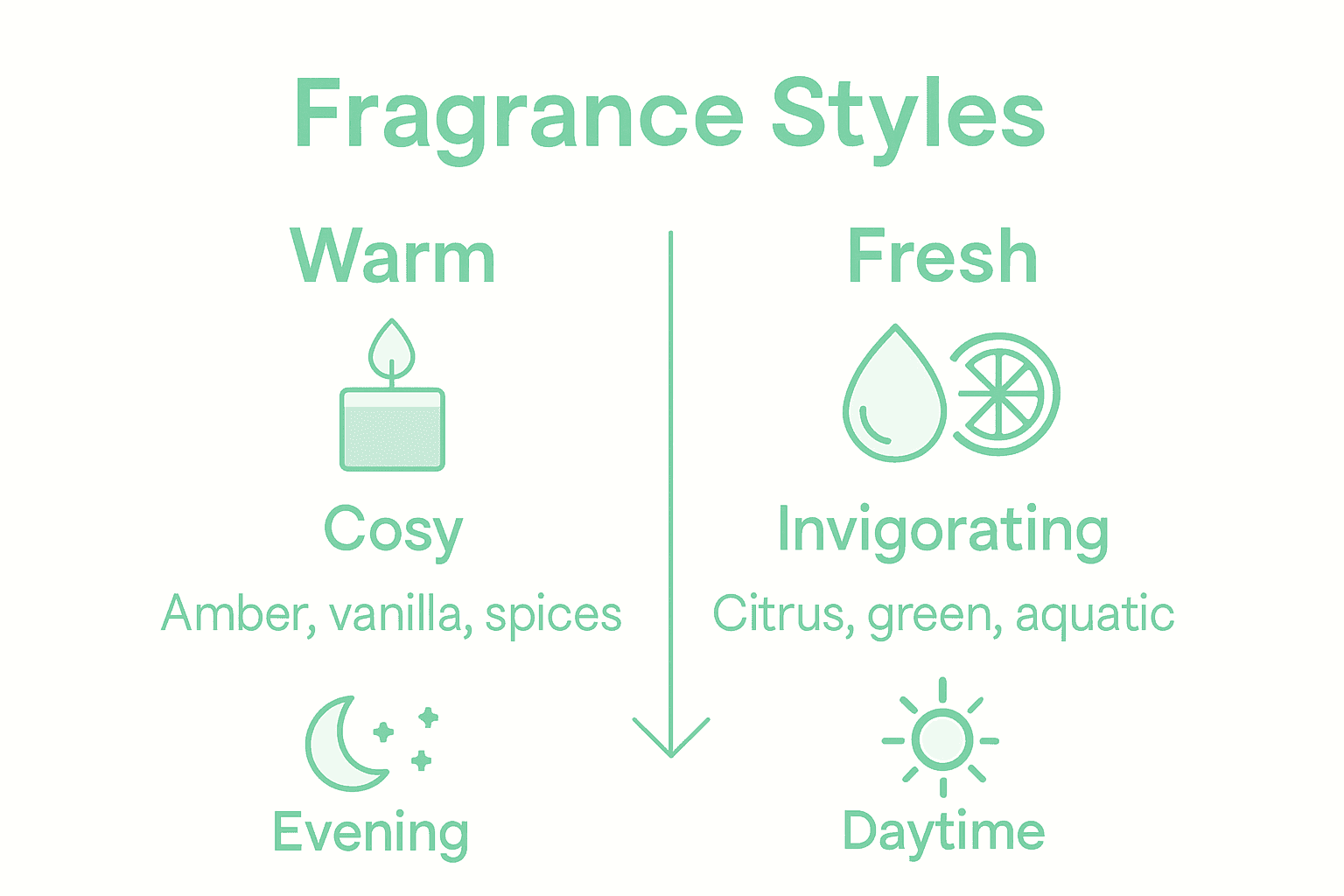
Warm fragrances characteristically embrace deep, luxurious notes that evoke comfort and sensuality. These scents typically feature rich ingredients like vanilla, amber, tonka bean, and exotic spices that create a sense of intimacy and sophistication. Oriental and gourmand fragrance families dominate this category, offering complex compositions that wrap around the wearer like a sumptuous cashmere blanket. In contrast, fresh fragrances celebrate lightness and vitality, incorporating crisp citrus, green botanical elements, and aquatic notes that suggest cleanliness, energy, and spontaneity.
The selection between warm and fresh styles often reflects not just personal preference, but also contextual considerations such as climate, occasion, and individual body chemistry. Warm fragrances tend to perform exceptionally well in cooler environments, their dense molecular structures projecting beautifully in autumn and winter. Fresh fragrances, meanwhile, shine in warmer months, their lighter compositions providing a cooling, invigorating sensation that complements rising temperatures and outdoor activities.
Pro Tip: Fragrance Versatility: Consider building a versatile fragrance wardrobe that includes both warm and fresh styles, allowing you to navigate different social settings and seasonal changes with olfactory confidence.
Common Mistakes When Selecting Perfume Families
Choosing the perfect fragrance requires nuanced understanding beyond simply selecting a pleasant scent. Explore Fragrance Families: A Beginner’s Guide highlights the intricate process of navigating perfume selection, revealing common pitfalls that can derail one’s olfactory journey.
One significant mistake involves selecting fragrances purely based on initial impressions without considering the scent’s complete developmental arc. Many individuals impulsively purchase perfumes after a brief spray, neglecting to understand how the fragrance transforms through its top, heart, and base notes. This oversight can lead to disappointment when a promising initial aroma evolves into an unexpectedly different olfactory experience. Equally problematic is the tendency to choose fragrances that do not align with personal body chemistry, skin type, or lifestyle considerations.
Another critical error is rigidly adhering to gender-specific fragrance marketing. Contemporary perfumery recognises that scent appreciation transcends traditional masculine and feminine categorisations. Individuals should feel empowered to explore fragrances across different families, selecting compositions that resonate with their personal aesthetic and emotional landscape. Additionally, many perfume enthusiasts mistakenly purchase signature scents without considering seasonal variations and appropriate contextual usage.
Pro Tip: Sensory Exploration: Always test fragrances on your skin and allow them to develop for a minimum of 30 minutes. Perfume samples worn throughout the day will reveal their true character, helping you make a more informed selection that genuinely complements your individual essence.
Discover Your Perfect Signature Scent with Confidence
Choosing the right perfume family can feel overwhelming when faced with so many options and intricate fragrance notes. This article highlighted common challenges like understanding fragrance families such as Floral, Woody, and Oriental, and the importance of allowing perfume notes to develop fully on your skin. Many perfume lovers struggle with picking a scent that truly complements their unique chemistry and lifestyle. At Alexandria UK, we focus on quality perfumes and expertly crafted dupes, helping you explore these fragrance families with ease and clarity.

Ready to find a perfume that resonates with your personality and mood? Explore our curated selection designed to match every scent profile and occasion. Whether you prefer warm Oriental tones or crisp Fresh fragrances, our range ensures you discover your signature scent today. Start your fragrance journey now at Alexandria UK and experience the confidence of a scent perfectly suited to you.
Frequently Asked Questions
What are the main fragrance families in perfumery?
The main fragrance families include Floral, Woody, Oriental, Citrus, and Aromatic, each representing distinct olfactory characteristics that help individuals identify their preferred scent profiles.
How do fragrance notes work in perfumes?
Fragrance notes are the individual scent components in a perfume, layered into top notes (initial impression), heart notes (core character), and base notes (lasting impression), which together create the total olfactory experience.
What is the best way to choose a signature scent?
To choose a signature scent, sample fragrances from various families, test them on your skin, and observe how they evolve over time, considering personal body chemistry, mood, and the seasons.
How do warm and fresh fragrance styles differ?
Warm fragrances are characterised by deep, luxurious notes that evoke comfort and sensuality, while fresh fragrances are light and invigorating, featuring crisp citrus and herbal elements ideal for energising experiences.