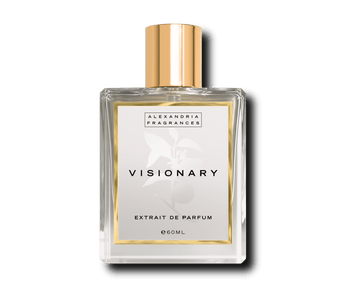

How to Compare Fragrances: Find the Best Scent for You
Did you know that the sense of smell can identify over 1 trillion different scents? Choosing the right fragrance involves more than just picking a bottle off the shelf. Each step, from proper sample preparation to analyzing scent notes, makes a difference in how a perfume truly performs on your skin. Learning these proven techniques helps you uncover scents that genuinely match your preferences, so you discover fragrances that feel uniquely yours.
Table of Contents
- Step 1: Prepare Your Fragrance Samples Correctly
- Step 2: Apply Fragrances For Fair Comparison
- Step 3: Analyse Scent Notes And Longevity
- Step 4: Test Fragrance Performance Over Time
- Step 5: Evaluate And Select Your Ideal Fragrance
Quick Summary
| Key Point | Explanation |
|---|---|
| 1. Use clean testing strips for fragrance | Clean glass or ceramic strips prevent scent alteration, allowing accurate evaluation. Avoid paper strips to maintain fragrance integrity. |
| 2. Apply fragrances to pulse points | Apply one spritz on pulse points for accurate scent development. This helps capture fragrance nuances effectively and objectively. |
| 3. Document scent notes and longevity | Track the fragrance’s evolution over time, noting the duration and characteristics of each layer for informed evaluation. |
| 4. Create a fragrance journal | Log initial application and observe changes in scent strength and note prominence at intervals for thorough assessment. |
| 5. Trust your personal connection to fragrance | Ultimately, choose a fragrance that resonates with your personal style and evokes positive emotions, as personal preference is key. |
Step 1: Prepare your fragrance samples correctly
Learning how to prepare your fragrance samples correctly is crucial for an accurate and enjoyable scent evaluation experience. Proper sample preparation allows you to understand the nuanced layers and true character of a perfume without contamination or misrepresentation.
Start by gathering clean glass or ceramic testing strips. Avoid using paper strips as they can alter the scent profile and absorb fragrance molecules differently. According to research from the Environment Agency, consistent sample preparation methods maintain the integrity of scent evaluations.
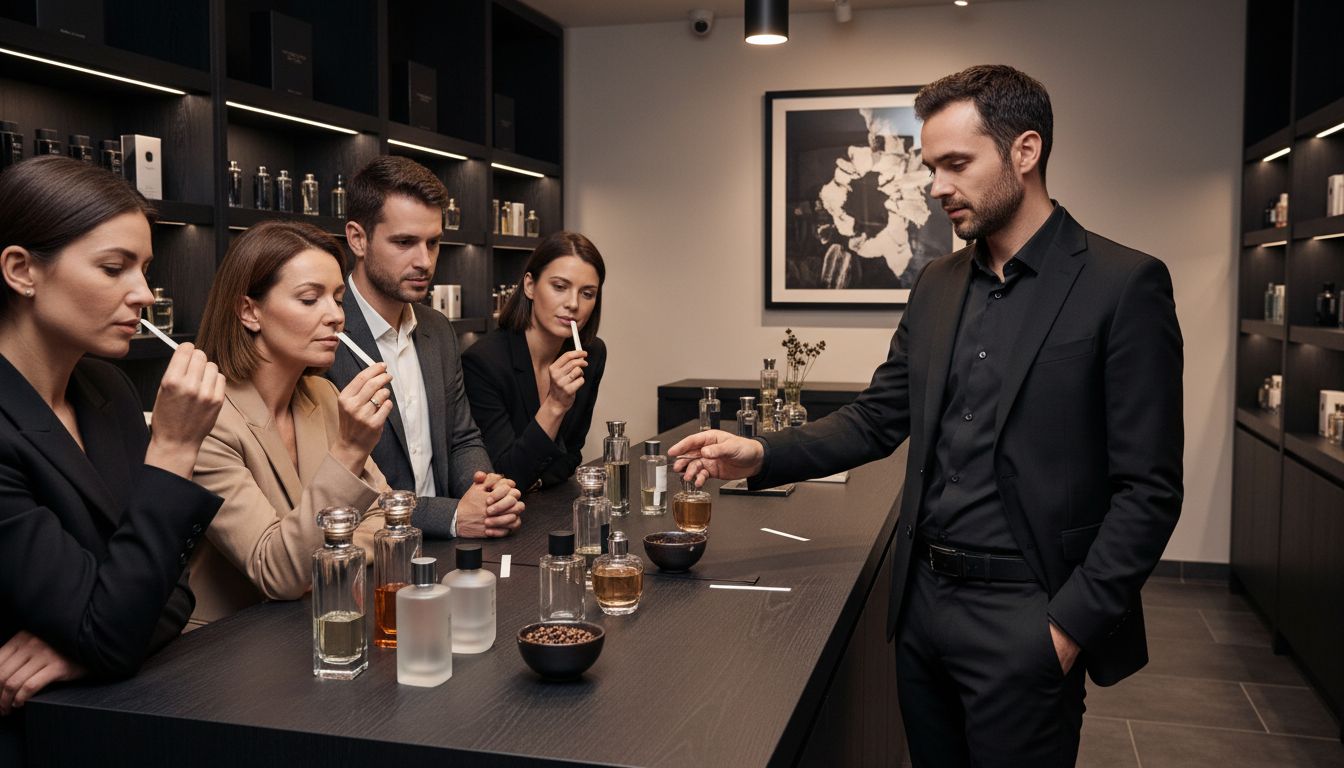
Hold the testing strip about two inches from the fragrance bottle and apply a light spray. Allow the sample to dry for approximately 30 seconds before smelling. This technique ensures you capture the initial top notes without overwhelming your olfactory senses. Learn more about finding your perfect fragrance match by understanding these subtle preparation techniques.
Pro tip: Always test fragrances on clean skin or testing strips in a neutral environment. Avoid testing multiple scents simultaneously to prevent olfactory fatigue and ensure each fragrance receives a fair assessment.
With your samples correctly prepared, you are now ready to begin your sensory exploration and discover the perfect scent that resonates with your personal style.
Step 2: Apply fragrances for fair comparison
Applying fragrances for a fair comparison requires precision and a systematic approach to ensure you capture the true essence of each scent. Your goal is to evaluate perfumes objectively without external influences skewing your perception.
Research from the Environment Agency emphasizes the importance of standardized application techniques to maintain unbiased scent assessments. According to the University of Cambridge Museums, applying fragrances to pulse points allows for the most accurate sensory experience.
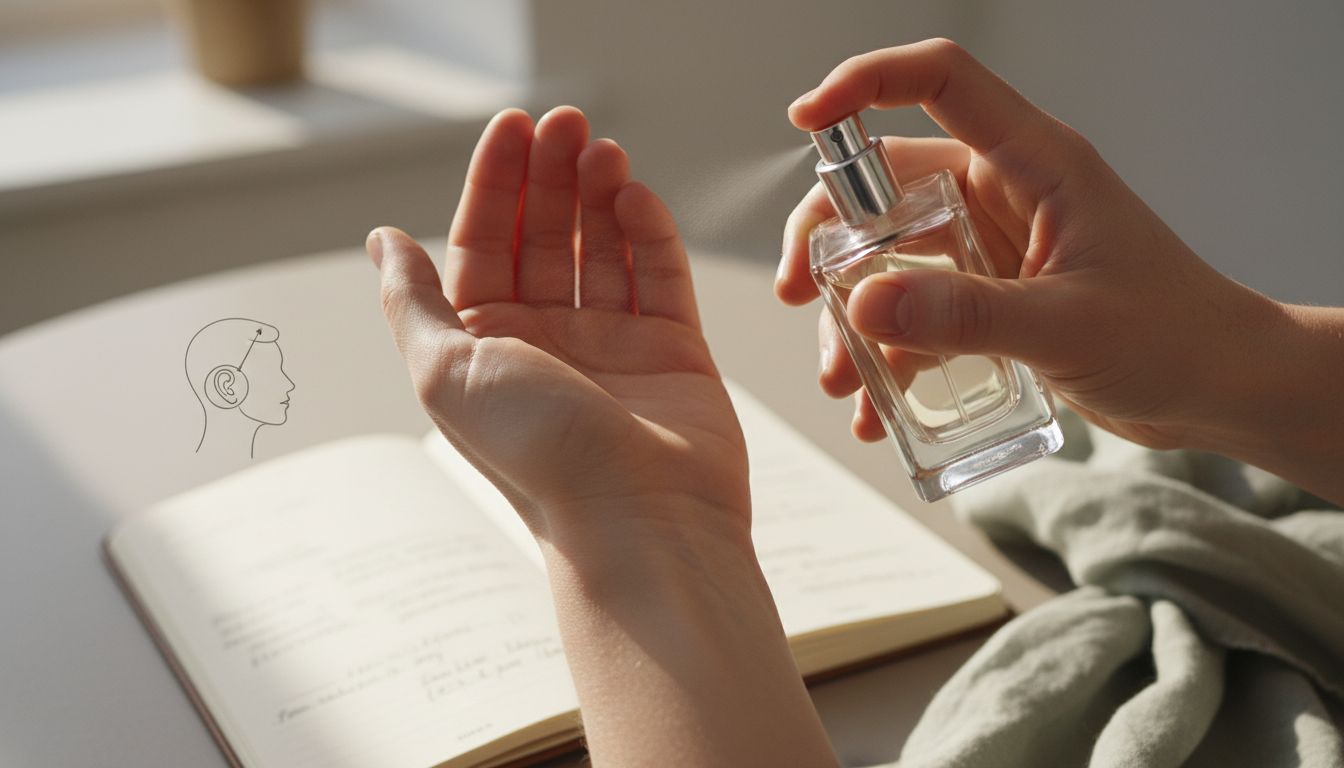
Begin by selecting specific pulse points on your body where body heat will help the fragrance develop naturally. These include the inner wrists, behind the ears, base of the throat, and inside the elbows. Apply one spritz of each fragrance to different pulse points approximately 10 minutes apart to prevent olfactory overlap. [Explore our Royalty inspired fragrance alternatives to expand your scent collection).
Give each fragrance adequate time to unfold. Professional perfume evaluators recommend waiting at least 30 minutes between testing different scents. This waiting period allows you to experience the fragrance through its various stages top notes, heart notes, and base notes.
Pro tip: Always apply fragrances on clean skin without other competing scents like lotions or deodorants. Wear neutral clothing that will not interfere with the fragrance development and perform your comparisons in a well-ventilated space with minimal external odors.
With these methodical application techniques, you are now prepared to conduct a comprehensive and fair fragrance comparison that will help you discover your perfect scent match.
Step 3: Analyse scent notes and longevity
Analysing scent notes and longevity is your key to understanding the true character and performance of a fragrance. This critical step transforms your fragrance comparison from a casual sniff test into a sophisticated sensory evaluation.
According to the Environment Agency’s report on odour classification, fragrances are complex compositions with distinct layers that evolve over time. The University of Cambridge Museums highlights how different fragrance components are strategically layered to create nuanced scent experiences.
Start by understanding the three primary fragrance note categories: top notes, heart notes, and base notes. Top notes are the initial scents you experience immediately after application. Heart notes emerge after 10 to 20 minutes and represent the fragrance’s core character. Base notes are the deepest scents that linger longest and become most noticeable after 30 minutes. [Discover a comprehensive guide to understanding fragrance notes] to deepen your olfactory knowledge.
Here’s a comparison of the main fragrance note categories and their characteristics:
| Note Category | When Detected | Typical Characteristics |
|---|---|---|
| Top Notes | Immediately after application | Fresh Citrusy Light |
| Heart Notes | 10–20 minutes after application | Floral Spicy Full-bodied |
| Base Notes | 30+ minutes after application | Woody Musky Long-lasting |
To assess longevity, document how long each fragrance remains detectable on your skin. Professional perfume enthusiasts recommend tracking the scent at 2hour intervals. Note how the fragrance transforms and when its presence begins to fade. Some fragrances might remain vibrant for 4 to 6 hours, while others might dissipate more quickly.
Pro tip: Environmental factors like humidity, body temperature, and skin chemistry significantly impact a fragrance’s performance. Always test fragrances in similar conditions to ensure a fair comparison.
With these analytical techniques, you are now equipped to make an informed decision about which fragrance truly resonates with your personal style and sensory preferences.
Step 4: Test fragrance performance over time
Testing fragrance performance is a crucial step in finding your perfect scent companion. This systematic approach will help you understand how a fragrance evolves and interacts with your unique body chemistry throughout the day.
The Environment Agency emphasizes the importance of prolonged observation to accurately assess odour characteristics. Similarly, the University of Cambridge Museums recommends monitoring fragrances at different intervals to evaluate their true performance potential.
Create a detailed fragrance journal to track each scent’s journey. Begin by noting the initial application time and spritz location. Every two hours, pause and assess the fragrance carefully. Pay attention to how the scent changes subtly from its initial bright top notes to the deeper, more complex base notes. [Learn more about understanding long lasting perfume secrets] to refine your evaluation techniques.
Consider documenting key aspects during each check in. Record the intensity of the scent strength, how prominently different notes emerge, and whether the fragrance remains pleasant or becomes overwhelming. Some fragrances might start vibrant and gradually soften, while others maintain a consistent profile throughout the day.
Pro tip: Test fragrances under different conditions. Wear them during various activities like a typical workday, during exercise, or in different environmental temperatures to understand their true versatility.
With this methodical approach, you are now prepared to make an informed decision about which fragrance truly matches your lifestyle and personal preferences.
Step 5: Evaluate and select your ideal fragrance
Selecting your ideal fragrance is an intimate journey of self discovery that goes beyond simple scent preference. This final step transforms your methodical research into a personal olfactory statement that reflects your unique personality and style.
The Environment Agency’s research provides a systematic framework for assessing odour characteristics, which can be brilliantly applied to personal fragrance selection. The University of Cambridge Museums encourages experimenting with various scent combinations to discover a truly personalized fragrance experience.
Review your fragrance journal comprehensively. Compare notes on performance, longevity, and how each scent made you feel throughout the day. Look beyond technical metrics and consider the emotional response each fragrance evoked. [Discover your perfect signature scent guide] to refine your selection process.
Consider your lifestyle and typical environments when making the final selection. A fragrance that performs exceptionally in a cool office might behave differently during an active evening or in warmer climates. Prioritize versatility and consistency across different settings.
Pro tip: Trust your instincts. While scientific evaluation is crucial, your personal connection to a fragrance matters most. The right scent should make you feel confident and authentic.
Congratulations. You have now completed a comprehensive fragrance selection journey that combines scientific methodology with personal intuition.
Discover Your Signature Scent with Confidence
Choosing the perfect fragrance is a personal journey that involves analysing scent notes, longevity and how a perfume performs over time. If you find yourself overwhelmed by the challenge of comparing fragrances and want to avoid the frustration of trial and error our carefully curated collection at Alexandria UK offers high quality perfumes inspired by beloved scents. With us you can explore royalty inspired alternatives or find your perfect match guided by detailed scent profiles and expert advice.
Take the next step in your fragrance journey today Visit Alexandria UK to experience a trusted selection of perfumes designed to complement your lifestyle and personal style Don’t miss the chance to find a scent that truly connects with you and enjoy the confidence that comes with wearing a fragrance as unique as you are.
Frequently Asked Questions
How do I prepare fragrance samples for accurate evaluation?
To prepare fragrance samples correctly, use clean glass or ceramic testing strips instead of paper. Hold the strip about two inches away from the bottle, spray lightly, and let it dry for around 30 seconds before smelling.
What pulse points should I use to apply fragrances for comparison?
Apply fragrances to pulse points like the inner wrists, behind the ears, and inside the elbows. This allows body heat to enhance the development of the scent for a more accurate evaluation.
How long should I wait to evaluate each fragrance after application?
Wait at least 30 minutes between testing different fragrances to experience the full development of each scent’s top, heart, and base notes. This waiting period is crucial for a fair assessment and understanding of each fragrance’s evolution.
What should I document in my fragrance journal?
In your fragrance journal, record the application time, location, and how each scent changes over time. Note its intensity and the prominence of various notes at two-hour intervals to track its performance effectively.
How can I ensure a comprehensive fragrance comparison?
To conduct a comprehensive fragrance comparison, test one scent at a time and avoid external scents like lotions or deodorants. Allow each fragrance to develop fully before making any comparisons for the most accurate results.
What factors should I consider when selecting my ideal fragrance?
When selecting your ideal fragrance, consider how it performed throughout the day, its versatility for different occasions, and the emotional response it evoked. Prioritize scents that resonate personally and make you feel confident.